
Blog

On June 29th, 2026, the United States Supreme Court decided a major Fourth Amendment case in Chatrie v. United States. The Court held that an individual retains a “reasonable expectation of privacy” in their historical cell phone location records even though said records are stored by a third party such as Google, which thus makes it a Fourth Amendment “search” for law enforcement to obtain such records.

This blog post will provide a very basic and easy to understand overview of how Chatrie v. United States was decided and the implications the case may have moving forward concerning the rapidly-evolving relationship between the Fourth Amendment and modern technology.

What were the basic facts of Chatrie v. United States?

Put simply, the defendant was arrested and prosecuted by the federal government for an armed bank robbery following an investigation by law enforcement that relied significantly on historical cell phone location data from a “geofence warrant” to establish Mr. Chatrie’s identity as the alleged perpetrator.

Through a multi-step process, law enforcement was able to use the geofence warrant to basically establish a virtual perimeter around the vicinity of the robbery to narrow down cell phone users who were in the immediate area—the result of which implicated Mr. Chatrie.

The district court denied Mr. Chatrie’s motion to suppress by relying on the “good faith exception” to the Fourth Amendment.

On appeal, the Fourth Circuit affirmed the district court’s denial of Mr. Chatrie’s motion to suppress but on different grounds, holding that under the third-party doctrine there was no Fourth Amendment “search” because he voluntarily shared the location data with Google and thus did not have a “reasonable expectation of privacy” in said data.

The Fourth Circuit did not, however, address whether the warrant was valid or if the “good faith exception” applied given that it was not necessary to do so once they held that there was no search in the first place.

What was the precise issue before SCOTUS in the Chatrie case?

The United Supreme Court granted certiorari solely to answer the question of whether law enforcement violated the Fourth Amendment of the United States Constitution by collecting the defendant’s cell phone location data.

To answer that question, the Court needed to address two threshold questions. First, whether this was a “search” at all as that term is understood under the Court’s 4th Amendment jurisprudence. And second, if this was indeed a search, whether the multi-step geofence warrant here made that search reasonable under the 4th Amendment.

Based on the record before the Supreme Court, the majority opted to only address the precise issue of whether this was a search at all. They answered yes to that question, but then left the subsequent issue of whether the search was reasonable to be decided first by the Fourth Circuit following further proceedings.

How did the justices align in Chatrie v. United States?

This was overall a 6-3 decision with Justice Elena Kagan writing for the majority. She was joined by Roberts, Sotomayor, Kavanaugh, and Jackson. Justice Gorsuch filed an opinion concurring in the judgment. Justice Jackson also wrote a concurrence joined by Justice Sotomayor. Justice Alito filed a dissent joined in part by Justice Thomas and Justice Barrett.  Justice Barrett also filed her own dissenting opinion—albeit a very short one.  

How did the majority analyze the Chatrie case?

Justice Kagan’s majority opinion analyzed the facts of Chatrie under the “reasonable expectation of privacy test” that the Court has frequently used since its 1967 decision in Katz v. United States. The Court held that Chatrie did, in fact, have a reasonable expectation of privacy in his historical cell phone location data, which thus meant that the government’s collection of this data was a Fourth Amendment search.

Central to the Court’s reasoning was that this data essentially tracks one’s movements so substantially that it is in many ways the functional equivalent of a “personal journal of a use’s movements”—much like “other private materials” typically subject to the Fourth Amendment such as “emails, documents, photographs and calendars.”  

The Court’s decision essentially extends its 2018 decision in Carpenter v. United States, which pertained to cell site location information. Similar to Carpenter, the Court’s third-party doctrine in the Fourth Amendment context did not prohibit a finding that the government conducted a “search” in Chatrie because:

  1. the location information revealed was “qualitatively different” than things like mere bank records and phone numbers dialed that are typically subject to that doctrine;
  2. the location information was “not truly shared” in the way that other materials subject to the third-party doctrine are

Thus, in the majority’s view, this seemed to be a simple case and a natural application of Carpenter to reiterate that the Fourth Amendment protects privacy interests from unreasonable governmental intrusion even in a high-tech world where much of our personal details are stored up in a cloud by various companies such as Google.

With that said, the majority left unresolved several other important issues pertaining to this particular case, including whether the warrant was valid or, even if it was not, whether the “good faith exception” might apply. On remand, the Fourth Circuit will need to address those specific issues. If either the warrant was valid or the good faith exception applies, the evidence obtained might still be admissible against Mr. Chatrie.

What did Justice Jackson’s concurrence say in Chatrie?

Justice Jackson wrote a concurrence that was joined by Justice Sotomayor that basically said the Court should have went on to also address the validity of the warrant. As Justice Jackson points out, the warrant at issue in Chatrie appears to lack sufficient particularity and probable cause.

What did Justice Gorsuch’s concurrence say in Chatrie?

Justice Gorsuch’s concurrence largely focused on identifying a few key problems with the use of the “reasonable expectation of privacy test.” In his view, this judge-made test has no basis in the text of the Fourth Amendment and is difficult to apply consistently in practice.

Instead of using the Katz reasonable expectation of privacy test, Justice Gorsuch proposes a framework grounded in the original meaning and text of the Fourth Amendment that, applied to this case, would first ask whether the location information was an “effect”—which is, of course, one of the categories expressly protected by the Fourth Amendment. Then, if the location information was an effect, whether this is a “search” based on the original public meaning of that term at the time the Fourth Amendment was ratified in 1791.

If the answer to both of those questions is yes (as Justice Gorsuch believes was the case here), then the Fourth Amendment clearly provides protection. The third-party doctrine would not apply at that point either, according to Justice Gorsuch, because the “effects” are Mr. Chatrie’s notwithstanding that Google also had some control over the location data.

Accordingly, since Justice’s Gorsuch’s analysis led to the same outcome as the majority’s decision, he concurred in the result despite differing significantly in his methodology and reasoning.

What did Justice Alito’s dissent say in Chatrie?

Justice Alito, joined in certain parts by Justice Thomas and Justice Barrett, took issue with several things in the majority’s opinion.

His first objection was procedural, arguing that the Court should neither have granted certiorari nor ultimately decided the case based on his belief that it was essentially an advisory opinion given that the decision would not actually grant Mr. Chatrie relief since the warrant would otherwise validate the search or the good faith exception would apply.

His additional objections were substantive. He argued that the majority improperly extended Carpenter, failed to apply the third party doctrine consistent with the Court’s well-established precedent, and needlessly created uncertainty and confusion for law enforcement and lower courts in how to apply the Court’s evolving Fourth Amendment jurisprudence.

What did Justice Barrett’s dissent say in Chatrie?

Justice Barrett filed a one-paragraph dissent simply stating that she believed that Mr. Chatrie had no reasonable expectation of privacy under the Supreme Court’s precedent (including Carpenter) because he “voluntarily disclosed” his location data to Google.

How much of an impact will the Chatrie decision have moving forward?

Obviously by any measure this can be counted as a win for privacy rights in the digital era. But with that said, it is likely way too early to tell exactly how much of an impact this decision will actually have both in practice and on the Court’s future Fourth Amendment jurisprudence.

On the one hand, the type of geofence warrants at issue in this case are no longer being used in quite the same way. Both the majority opinion and Justice Alito’s dissent point this fact out.

On the other hand, the reasoning and overall logic of the opinion is likely to extend to other technology-based investigative methods used by law enforcement in the present as well as the future.

So too might Chatrie provide an opening for criminal defense attorneys to push back on prosecutors attempting to justify searches under the third party doctrine—especially in cases involving technology that reveals increasingly intimate and personal details about one’s activities. After all, strict adherence to the Court’s precedent on the third-party doctrine would have seemingly led to a win for the government here, but the majority held otherwise. How far the logic of the majority opinion extends on this point is to be seen, but it is fair to say the strength of the third-party doctrine moving forward is certainly not the slam dunk that it used to be for prosecutors.

Finally, Chatrie indicates that at least as of 2026, the Katz “reasonable expectation of privacy test” lives on. With that said, given the Court’s current make up and overall commitment to an originalist methodology, one definitely gets the sense that there might be an interest in the future by at least a few justices in revisiting whether there is a more coherent and workable framework for the Fourth Amendment. And as evidenced by Justice Gorsuch’s concurrence (as well as some of the sources he cites to), it is very much plausible that a framework grounded in the original meaning of the Fourth Amendment’s terms could provide greater protection to criminal defendants than the malleable and long-criticized Katz test.

Final Thoughts

All in all, this is a good decision for criminal defendants and those who care about privacy rights in the digital age. Exactly how much of an impact this case will have is surely to be seen. But at least for now, we can sleep a little easier at night knowing that the sensitive information about our personal lives that gets stored up in the cloud is not exempt from the Fourth Amendment’s protections merely because a third-party company such as Google or Apple stores it on their servers.

This blog post was written by NY criminal defense lawyer Michael J. McConnell on 7/6/26.

Disclaimer: For informational and educational purposes only. This article is not intended to be legal advice. If you need legal advice, please contact a qualified attorney in your jurisdiction for personalized legal advice based on your unique situation.
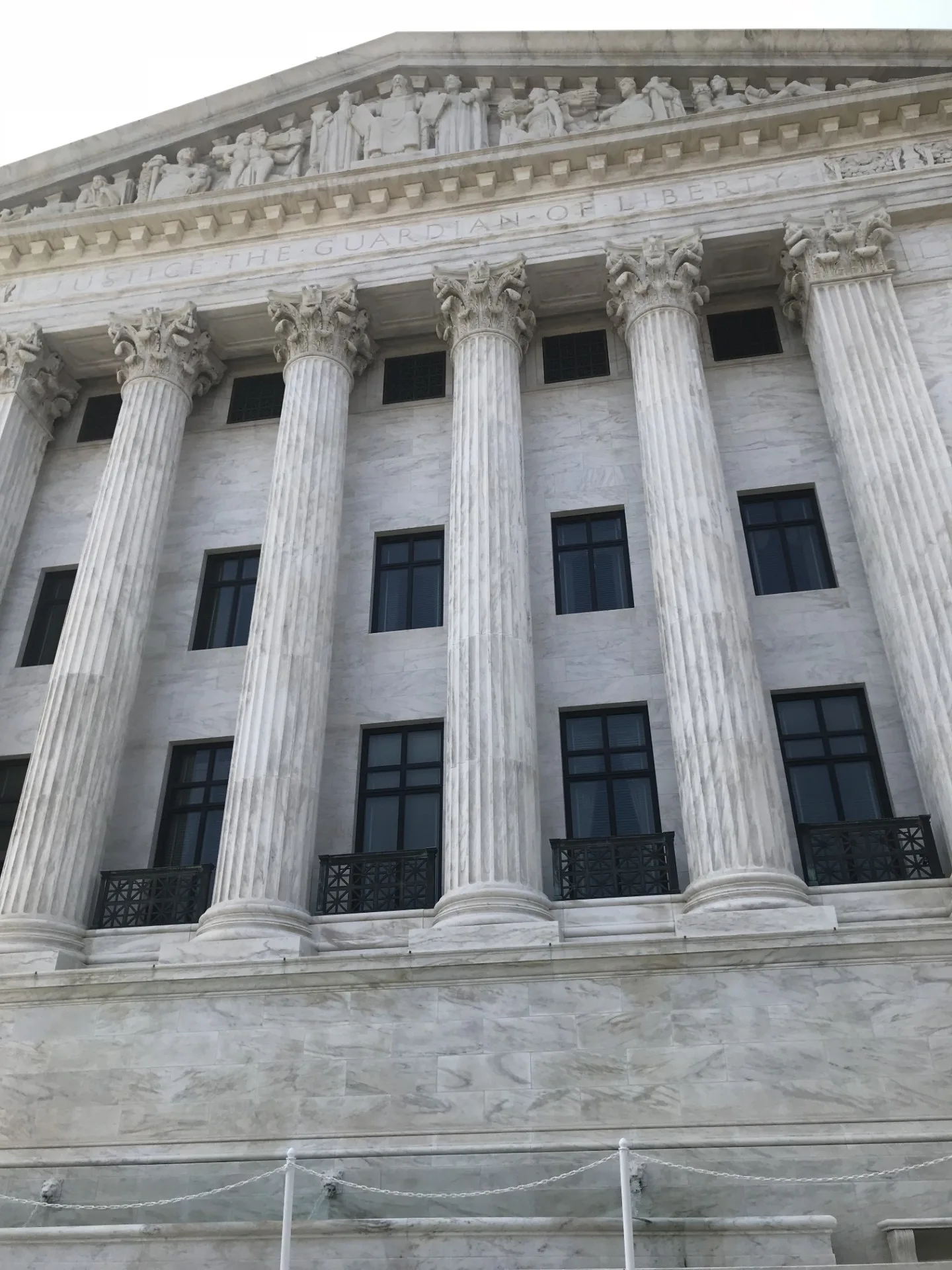
Picture of the United States Supreme Court.
4th Amendment Case Law Update: Chatrie v. United States

On June 29th, 2026, the United States Supreme Court decided a major Fourth Amendment case in Chatrie v. United States. The Court held that an individual retains a “reasonable expectation of privacy” in their historical cell phone location records even though said records are stored by a third party such as Google, which thus makes it a Fourth Amendment “search” for law enforcement to obtain such records.

This blog post will provide a very basic and easy to understand overview of how Chatrie v. United States was decided and the implications the case may have moving forward concerning the rapidly-evolving relationship between the Fourth Amendment and modern technology.

What were the basic facts of Chatrie v. United States?

Put simply, the defendant was arrested and prosecuted by the federal government for an armed bank robbery following an investigation by law enforcement that relied significantly on historical cell phone location data from a “geofence warrant” to establish Mr. Chatrie’s identity as the alleged perpetrator.

Through a multi-step process, law enforcement was able to use the geofence warrant to basically establish a virtual perimeter around the vicinity of the robbery to narrow down cell phone users who were in the immediate area—the result of which implicated Mr. Chatrie.

The district court denied Mr. Chatrie’s motion to suppress by relying on the “good faith exception” to the Fourth Amendment.

On appeal, the Fourth Circuit affirmed the district court’s denial of Mr. Chatrie’s motion to suppress but on different grounds, holding that under the third-party doctrine there was no Fourth Amendment “search” because he voluntarily shared the location data with Google and thus did not have a “reasonable expectation of privacy” in said data.

The Fourth Circuit did not, however, address whether the warrant was valid or if the “good faith exception” applied given that it was not necessary to do so once they held that there was no search in the first place.

What was the precise issue before SCOTUS in the Chatrie case?

The United Supreme Court granted certiorari solely to answer the question of whether law enforcement violated the Fourth Amendment of the United States Constitution by collecting the defendant’s cell phone location data.

To answer that question, the Court needed to address two threshold questions. First, whether this was a “search” at all as that term is understood under the Court’s 4th Amendment jurisprudence. And second, if this was indeed a search, whether the multi-step geofence warrant here made that search reasonable under the 4th Amendment.

Based on the record before the Supreme Court, the majority opted to only address the precise issue of whether this was a search at all. They answered yes to that question, but then left the subsequent issue of whether the search was reasonable to be decided first by the Fourth Circuit following further proceedings.

How did the justices align in Chatrie v. United States?

This was overall a 6-3 decision with Justice Elena Kagan writing for the majority. She was joined by Roberts, Sotomayor, Kavanaugh, and Jackson. Justice Gorsuch filed an opinion concurring in the judgment. Justice Jackson also wrote a concurrence joined by Justice Sotomayor. Justice Alito filed a dissent joined in part by Justice Thomas and Justice Barrett.  Justice Barrett also filed her own dissenting opinion—albeit a very short one.  

How did the majority analyze the Chatrie case?

Justice Kagan’s majority opinion analyzed the facts of Chatrie under the “reasonable expectation of privacy test” that the Court has frequently used since its 1967 decision in Katz v. United States. The Court held that Chatrie did, in fact, have a reasonable expectation of privacy in his historical cell phone location data, which thus meant that the government’s collection of this data was a Fourth Amendment search.

Central to the Court’s reasoning was that this data essentially tracks one’s movements so substantially that it is in many ways the functional equivalent of a “personal journal of a use’s movements”—much like “other private materials” typically subject to the Fourth Amendment such as “emails, documents, photographs and calendars.”  

The Court’s decision essentially extends its 2018 decision in Carpenter v. United States, which pertained to cell site location information. Similar to Carpenter, the Court’s third-party doctrine in the Fourth Amendment context did not prohibit a finding that the government conducted a “search” in Chatrie because:

  1. the location information revealed was “qualitatively different” than things like mere bank records and phone numbers dialed that are typically subject to that doctrine;
  2. the location information was “not truly shared” in the way that other materials subject to the third-party doctrine are

Thus, in the majority’s view, this seemed to be a simple case and a natural application of Carpenter to reiterate that the Fourth Amendment protects privacy interests from unreasonable governmental intrusion even in a high-tech world where much of our personal details are stored up in a cloud by various companies such as Google.

With that said, the majority left unresolved several other important issues pertaining to this particular case, including whether the warrant was valid or, even if it was not, whether the “good faith exception” might apply. On remand, the Fourth Circuit will need to address those specific issues. If either the warrant was valid or the good faith exception applies, the evidence obtained might still be admissible against Mr. Chatrie.

What did Justice Jackson’s concurrence say in Chatrie?

Justice Jackson wrote a concurrence that was joined by Justice Sotomayor that basically said the Court should have went on to also address the validity of the warrant. As Justice Jackson points out, the warrant at issue in Chatrie appears to lack sufficient particularity and probable cause.

What did Justice Gorsuch’s concurrence say in Chatrie?

Justice Gorsuch’s concurrence largely focused on identifying a few key problems with the use of the “reasonable expectation of privacy test.” In his view, this judge-made test has no basis in the text of the Fourth Amendment and is difficult to apply consistently in practice.

Instead of using the Katz reasonable expectation of privacy test, Justice Gorsuch proposes a framework grounded in the original meaning and text of the Fourth Amendment that, applied to this case, would first ask whether the location information was an “effect”—which is, of course, one of the categories expressly protected by the Fourth Amendment. Then, if the location information was an effect, whether this is a “search” based on the original public meaning of that term at the time the Fourth Amendment was ratified in 1791.

If the answer to both of those questions is yes (as Justice Gorsuch believes was the case here), then the Fourth Amendment clearly provides protection. The third-party doctrine would not apply at that point either, according to Justice Gorsuch, because the “effects” are Mr. Chatrie’s notwithstanding that Google also had some control over the location data.

Accordingly, since Justice’s Gorsuch’s analysis led to the same outcome as the majority’s decision, he concurred in the result despite differing significantly in his methodology and reasoning.

What did Justice Alito’s dissent say in Chatrie?

Justice Alito, joined in certain parts by Justice Thomas and Justice Barrett, took issue with several things in the majority’s opinion.

His first objection was procedural, arguing that the Court should neither have granted certiorari nor ultimately decided the case based on his belief that it was essentially an advisory opinion given that the decision would not actually grant Mr. Chatrie relief since the warrant would otherwise validate the search or the good faith exception would apply.

His additional objections were substantive. He argued that the majority improperly extended Carpenter, failed to apply the third party doctrine consistent with the Court’s well-established precedent, and needlessly created uncertainty and confusion for law enforcement and lower courts in how to apply the Court’s evolving Fourth Amendment jurisprudence.

What did Justice Barrett’s dissent say in Chatrie?

Justice Barrett filed a one-paragraph dissent simply stating that she believed that Mr. Chatrie had no reasonable expectation of privacy under the Supreme Court’s precedent (including Carpenter) because he “voluntarily disclosed” his location data to Google.

How much of an impact will the Chatrie decision have moving forward?

Obviously by any measure this can be counted as a win for privacy rights in the digital era. But with that said, it is likely way too early to tell exactly how much of an impact this decision will actually have both in practice and on the Court’s future Fourth Amendment jurisprudence.

On the one hand, the type of geofence warrants at issue in this case are no longer being used in quite the same way. Both the majority opinion and Justice Alito’s dissent point this fact out.

On the other hand, the reasoning and overall logic of the opinion is likely to extend to other technology-based investigative methods used by law enforcement in the present as well as the future.

So too might Chatrie provide an opening for criminal defense attorneys to push back on prosecutors attempting to justify searches under the third party doctrine—especially in cases involving technology that reveals increasingly intimate and personal details about one’s activities. After all, strict adherence to the Court’s precedent on the third-party doctrine would have seemingly led to a win for the government here, but the majority held otherwise. How far the logic of the majority opinion extends on this point is to be seen, but it is fair to say the strength of the third-party doctrine moving forward is certainly not the slam dunk that it used to be for prosecutors.

Finally, Chatrie indicates that at least as of 2026, the Katz “reasonable expectation of privacy test” lives on. With that said, given the Court’s current make up and overall commitment to an originalist methodology, one definitely gets the sense that there might be an interest in the future by at least a few justices in revisiting whether there is a more coherent and workable framework for the Fourth Amendment. And as evidenced by Justice Gorsuch’s concurrence (as well as some of the sources he cites to), it is very much plausible that a framework grounded in the original meaning of the Fourth Amendment’s terms could provide greater protection to criminal defendants than the malleable and long-criticized Katz test.

Final Thoughts

All in all, this is a good decision for criminal defendants and those who care about privacy rights in the digital age. Exactly how much of an impact this case will have is surely to be seen. But at least for now, we can sleep a little easier at night knowing that the sensitive information about our personal lives that gets stored up in the cloud is not exempt from the Fourth Amendment’s protections merely because a third-party company such as Google or Apple stores it on their servers.

This blog post was written by NY criminal defense lawyer Michael J. McConnell on 7/6/26.

Disclaimer: For informational and educational purposes only. This article is not intended to be legal advice. If you need legal advice, please contact a qualified attorney in your jurisdiction for personalized legal advice based on your unique situation.

Website developed in accordance with Web Content Accessibility Guidelines 2.2.
If you encounter any issues while using this site, please contact us: (914) 810-0510